

Every property has a story. But some of the most instructive stories are the ones that start one way and end in a completely different place. A few months ago, I got a call from a homeowner whose Westlake luxury property had been sitting on the market for almost six months. They had done everything their previous agent recommended, priced the home based on a comparative market analysis, staged it professionally, and waited. The showings were sparse. The offers never came. They were starting to look at price reduction letters when a friend suggested they give me a call.
That phone call led to a different outcome than a price cut. It led to an auction that sold the home within 30 days at a price the sellers were happy with. Here is how it happened and what it taught me about the power of changing the approach when the traditional path stops working.
The Problem: A Great Home with No Traction
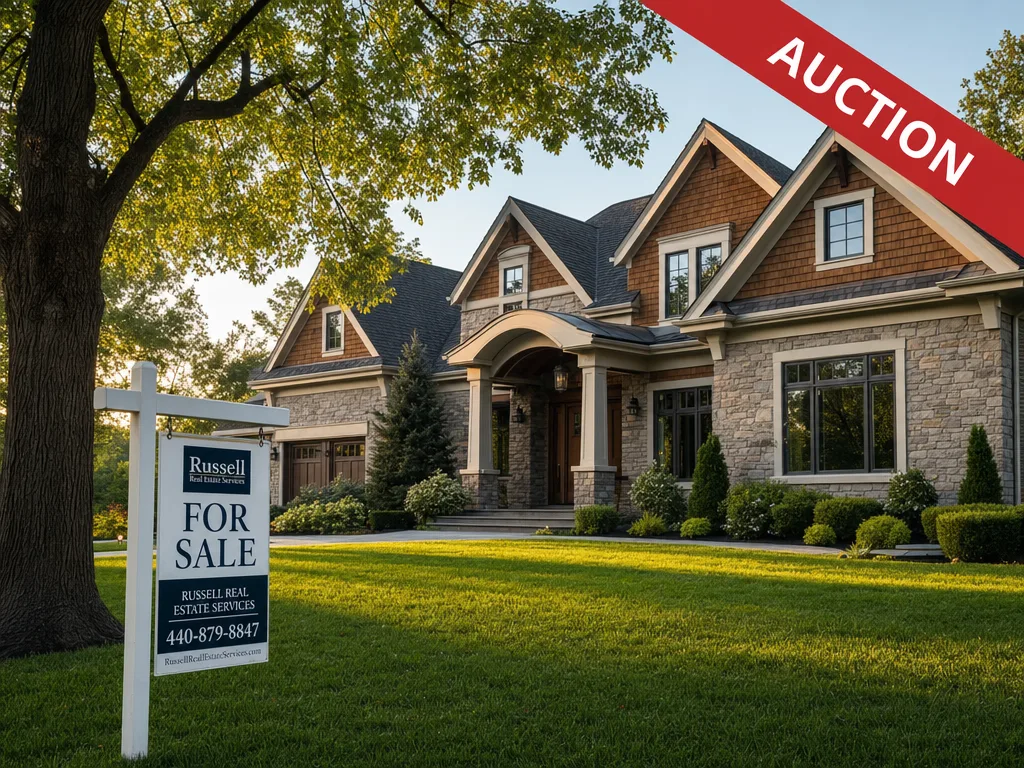
The property was a custom-built colonial in one of Westlake's most desirable neighborhoods, just off Detroit Road near the border of Bay Village. It had four bedrooms, four and a half bathrooms, over 4,200 square feet of finished living space, a finished basement with a home theater and wet bar, and a private backyard that backed up to a wooded conservation area. The home had been built in 2012 by a respected local builder and had been meticulously maintained.
On paper, this was a property that should have sold. The schools in Westlake are among the strongest in Northeast Ohio. The location is minutes from Crocker Park, the Cleveland Metroparks, and the Lake Erie shoreline. The home itself was turnkey, with modern finishes, a three-car garage, and a layout that worked for both entertaining and daily family life.
So why had it not sold? The previous agent had listed it at $1.15 million, which was in line with comparable sales at the time. But the market had shifted slightly. Inventory in the luxury segment had ticked up, and buyers in that price range were taking longer to make decisions. The property also faced a subtle but real challenge: it was positioned between two communities, so some buyers searching in Westlake overlooked it, while others searching in Bay Village never saw it.
The sellers were frustrated. They had kept the home showing-ready every day for six months. They had turned down weekend plans and rearranged their schedules at the last minute for showings that often did not turn into second visits. They were facing the prospect of a price reduction that could be anywhere from $50,000 to $100,000, and they were not confident that a lower price would change the outcome. For more on the signals that indicate it might be time to try a different approach, see my article on traditional listing vs. real estate auction in Ohio.
The Decision: Trying a Different Path
When the sellers called, they had two questions. First, could auction work for a home that had not sold through traditional channels? And second, would they be forced to accept a low price just to get a sale?
I explained that a stalled traditional listing is actually one of the strongest use cases for a real estate auction. When a property has been on the market for months, buyer perception shifts. People start wondering what is wrong with it. They wait for a price reduction. The property loses momentum, and without a catalyst, that momentum can be very hard to regain.
An auction resets that dynamic. It creates a defined timeline with a clear end date. It introduces competitive bidding, where buyers do not just negotiate with the seller, they negotiate against each other. And it attracts a different pool of buyers, people who are ready to make a decision and compete for a property they want.
We set a reserve price that protected the sellers' position. The reserve was based on a fresh market analysis, not on what the home had been listed for months earlier. The sellers agreed to a 30-day marketing campaign leading up to auction day. For a closer look at how reserve prices work and why they protect sellers in the auction process, see can I sell my home at auction and still get a fair price in Ohio.
The Process: A Fresh Marketing Campaign with a Deadline
We launched a new marketing campaign that treated the property as a fresh listing. We created a dedicated website with professional photography, virtual tour, and detailed property information. We distributed the auction notice through our buyer database, which includes pre-qualified buyers actively looking for luxury properties in Westlake, Rocky River, Bay Village, Avon, Avon Lake, Strongsville, and the surrounding communities.
We also ran targeted digital ads aimed at buyers who had shown interest in Westlake luxury properties but had not yet purchased. The A.I.-supported tools we use helped identify households with the financial profile and search behavior that matched this property's buyer profile. For more on how this technology works, see my article on the A.I. Listing Advantage for luxury homes in Westlake.
The response was immediate. Within the first week, we had multiple inquiries from buyers who had never seen the property during its traditional listing. Some were relocating from out of state and appreciated the defined timeline. Others were local buyers who had been casually looking but were motivated by the auction format to act decisively.
We scheduled preview showings for registered bidders over two weekends. Each showing was by appointment only, and every attendee was pre-qualified before they walked through the door. The sellers appreciated the structure. Instead of open houses with uncertain attendance, they had scheduled showings with serious, qualified participants.
Auction Day: Competitive Energy Changed Everything
Auction day arrived on a Saturday afternoon. We held the auction at a venue near Westlake, with the property available for a final preview before the bidding started. The room held about a dozen registered bidders and their attendees. Not a massive crowd, but the energy was focused. These were buyers who had come prepared to make a decision.
The auctioneer opened the bidding below the reserve to encourage early participation. A bid came in from the right side of the room. Then another from the back. The auctioneer worked the room skillfully, drawing out increments and keeping the momentum going. When the bidding approached the reserve, a new bidder entered from the front row, a couple who had seen the property during the preview and had been thinking about it all week.
The final round of bidding came down to two parties. The auctioneer moved between them, each bid pulling the price higher. When the gavel dropped, the winning bid was above the reserve, and it was above what the previous traditional listing had been asking. The sellers, watching from the back, could hardly believe it. They had been preparing for a price reduction. Instead, they got a sale at a price they were genuinely happy with.
The winning bidders were a couple relocating from Chicago for a job opportunity in Cleveland. They had been looking for homes in the Westlake area for two months and had grown frustrated with the slow pace of traditional negotiations. The auction format gave them a clear path to a home they loved. They closed 30 days later.
The Outcome: A Sale That Exceeded Expectations
At the end of the day, the numbers told a clear story. The property had been on the market for nearly six months through a traditional listing with no offers. It switched to auction, sold in 30 days, and closed at a price that was higher than the asking price that had failed to attract a single offer. The sellers avoided the price reduction they had been dreading and moved on to their next chapter with confidence.
The buyers got a home they loved without the drawn-out negotiation process. The sellers got a fair price on a defined timeline. And I got to watch an outcome that validated what I have seen many times: sometimes the problem is not the price. It is the method.
For a broader look at how auctions stack up against traditional listings across different property types, see my comparison of auction vs. traditional listing for estate sales in Ohio.
Lessons for Luxury Homeowners in Westlake and Northeast Ohio
Here are the takeaways I want every homeowner in Westlake, Rocky River, Bay Village, Avon, Avon Lake, North Olmsted, Olmsted Falls, Fairview Park, Lakewood, Strongsville, Brunswick, and Medina to know from this experience:
- • Stalling does not mean the price is wrong. A property can be priced correctly and still sit on the market if the method of sale does not create urgency. The same property that drew no offers through a traditional listing attracted multiple bidders at auction because the format itself motivated action.
- • Auction attracts a different buyer pool. Many of the bidders at this auction had never seen the property during its traditional listing. The auction marketing reached them through different channels, and the format appealed to buyers who wanted clarity and a defined timeline.
- • A reserve price protects your position. The sellers set a reserve that reflected the current market value, and the competitive bidding drove the final price above that reserve. Auction does not mean accepting a lowball offer. It means letting the market decide within a framework that protects the seller.
- • Timeline certainty matters. The sellers knew exactly when the auction would happen, when they would have an answer, and when they could plan to close. For families facing a relocation, a retirement transition, or the need to move on a schedule, that certainty is worth a great deal.
- • It is never too late to change course. This property had been on the market for six months. The sellers could have accepted a price reduction and hoped for the best. Instead, they chose a different path and got a better result. Switching to auction after a traditional listing has stalled is not an admission of failure. It is a strategic move.
Every property and every seller's situation is different. But the principle here is one I have seen hold true across dozens of auctions: when the traditional path stops working, a fresh approach can reset the entire dynamic. If your home has been sitting on the market longer than you expected, or if you want to explore your options before listing at all, I would welcome the chance to walk through your situation and talk about which path makes the most sense for you. To understand more about how I approach both traditional listings and auctions, visit my services page for a full overview.
John's Take
This Westlake auction reinforced something I have believed since I started in this business: the market is full of ready, willing buyers. The question is whether the method of sale is designed to give them a reason to act. A competitive auction does that in a way that a traditional listing often cannot, especially for properties that have lost momentum.
Frequently Asked Questions
Can I switch from a traditional listing to an auction mid-stream in Ohio?
Yes. If your listing agreement has expired or you have the right to terminate, you can switch to an auction strategy at any point. I work with sellers to review their current agreement and plan the transition so there is no gap in marketing coverage. Many of my best auction results have come from properties that had been sitting on the market for months through a traditional listing.
Will an auction get a lower price than a traditional sale?
Not necessarily. In this Westlake case, the auction produced a higher sale price than the traditional listing had been asking. A well-marketed auction with a properly set reserve price and competitive bidding often produces fair market value or better. The key is reaching the right pool of motivated buyers and creating an environment where they compete directly with each other.
What happens if the bidding does not reach the reserve price?
If the bidding does not reach the reserve, the seller has the right to reject the highest bid and walk away. The reserve price is confidential and is set before the auction based on current market conditions. This protects the seller from being forced to accept a price below their minimum acceptable level. If the property does not sell at auction, we can discuss next steps, which may include adjusting the reserve or switching to a traditional listing.
How long does the auction process take from start to closing?
A typical real estate auction runs 30 to 45 days from the start of marketing to closing. That includes a 3-4 week marketing campaign, preview days, the auction event, and a 30-day closing period for the winning bidder. This is significantly faster than the average luxury home traditional listing, which can take 3 to 6 months or longer for properties in the $1M+ range.
Does auction work for high-value homes in Westlake and Northeast Ohio?
Yes. I have successfully auctioned properties across the $500,000 to $2M+ range in Westlake, Rocky River, Bay Village, Avon, Avon Lake, Strongsville, and the surrounding communities. Auction works particularly well for distinctive properties, homes in desirable neighborhoods with limited inventory, and situations where the seller wants a defined timeline. The luxury buyer market in Northeast Ohio has embraced competitive bidding, especially for well-marketed properties with a clear value proposition.
If your home has been sitting on the market longer than you expected, or if you are considering your options and want to understand whether auction might be the right path, I welcome the chance to talk. A no-obligation conversation can help you see your situation from a fresh perspective.
Contact John FroelichBest wishes,
John C. Froelich, CAI, AARE, AMM