
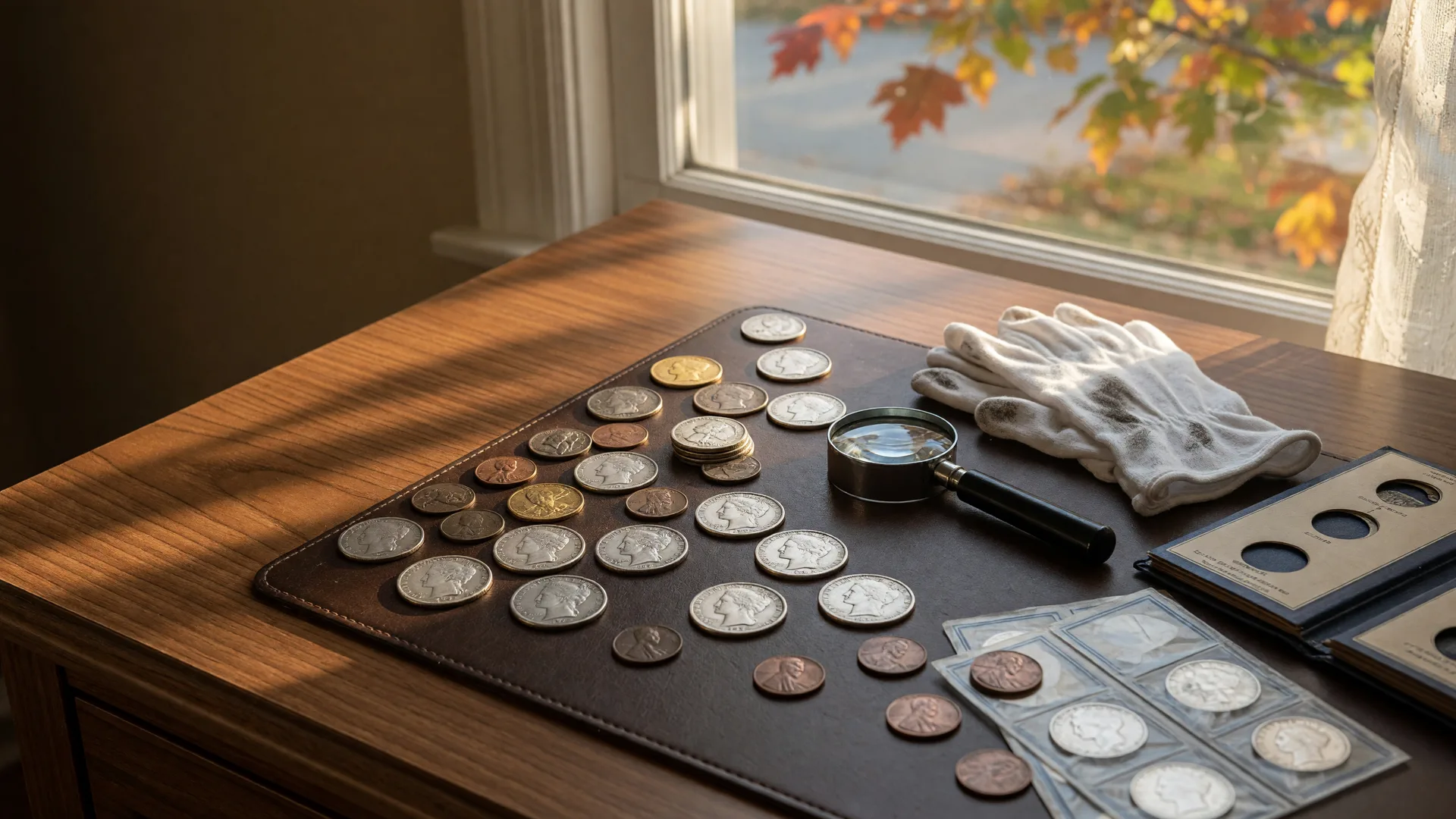
To sell a coin collection at auction in Ohio, start by sorting and inventorying every coin, do not clean any of them, and get an independent read on value before the collection goes to market. That is the guidance the American Numismatic Association gives to families, and it matters most at the exact moment a collection usually surfaces: after a loved one has passed, or during a downsizing move out of a family home. Most collections are worth less than the owner hoped and more than a quick cash offer suggests, and the honest number only appears after the coins are organized, researched, and exposed to real competition.
For the twelve communities I serve, from Westlake and Rocky River to Brunswick and Medina, coin collections typically appear inside an estate being settled, inside a home being downsized, or inside a safe that has not been opened in years. This guide covers how to value the collection, how to choose between a local dealer, a coin show, and an auction, and what happens when coins cross the block alongside the rest of an estate.
Face Value, Melt Value, and Collector Value Are Three Different Numbers
Every coin carries three numbers, and knowing which one applies keeps a family from mispricing the whole box. Face value is the denomination stamped on the coin, the legal tender amount the government assigned, such as one dollar on a Morgan silver dollar. Melt value is the metal inside: weight multiplied by purity multiplied by the current spot price of the silver or gold, a number that moves with the commodities markets. Collector value, also called numismatic value, is the premium the market pays for rarity, condition, and demand, and it is where the surprises, good and bad, live.
A common circulated 1921 Morgan silver dollar, for example, carries only a little more than its silver content in average grades, while the same date in exceptional condition can sell for many times that amount. That gap is exactly why grading exists. Independent grading services such as PCGS and NGC authenticate each coin, assign a grade on the Sheldon 1-70 scale that the American Numismatic Association adopted in the 1970s, and seal the coin in a tamper-evident holder with a verifiable certification number. Because the graders do not buy or sell the coins themselves, they have no stake in the outcome, which is why a slabbed grade carries weight with buyers. You can read the full explanation of their process on the NGC coin grading scale page.
Start With Sorting and Inventory, Not a Quick Cash Offer
The strongest first move is a notebook and a box of coin flips, not a phone call to the first buyer who advertises cash for coins. Sort every coin by denomination, then by date, and note the mint mark where one exists. Count each group, keep the obvious pocket change separate from the collector coins, and photograph the collection before anything changes hands. This inventory becomes the basis for every offer you compare later, and it protects the estate if items disappear or get mixed in transit between one shop and the next.
One rule comes before any of it, straight from the American Numismatic Association: never clean coins. Polishing, dipping, or scrubbing removes the surface that carries the coin's condition, and what looks like an improvement to a family reads as damage to a collector. A circulated coin that kept its original surfaces can hold strong value; the same coin scrubbed shiny often drops to little more than melt value.
In estates I handle across Westlake, Rocky River, Bay Village, Avon, Avon Lake, North Olmsted, Olmsted Falls, Fairview Park, Lakewood, Strongsville, Brunswick, and Medina, collections come out of closets, attics, and basement workshops, often mixed with stamps, jewelry, and loose change. The sorting step alone, separating the pocket change from the collector coins, is usually worth real money by the time the collection reaches a buyer.
Get an Independent Read on Value in Northeast Ohio
The American Numismatic Association points families to a straightforward path. Research values yourself using A Guide Book of United States Coins, the Red Book, if you are willing to learn the basics. Work with an ANA-affiliated dealer or appraiser, findable through the association's dealer directory. And for formal appraisals needed by an estate or for tax purposes, expect to pay a professional fee, because a genuine appraisal is a written, researched opinion about value, not a handshake estimate. The association publishes these steps in its coin collecting FAQ and its numismatic estate resources.
In the West Shore area you have real local options for a first read. Savvy Coin & Jewelry Exchange at 30672 Detroit Road in Westlake, Carat Coin LLC at 30131 Lorain Road in North Olmsted, and Rocky River Estate Jewelry and Coin at 19136 Old Detroit Road in Rocky River all buy and sell coins and can give you a feel for the market before you commit to any path. A dealer who buys outright is the right answer for a small collection you want converted to cash in one stop. For a larger collection, or one tied to an estate sale, an auction typically puts the coins in front of more buyers and lets the market set the number.
Sell a Coin Collection at Auction in Ohio: What the Process Looks Like
A coin collection moves through the same disciplined path as any other asset in an auction campaign. We sign a consignment agreement that sets the terms: how the lots are grouped, the reserve on the high-value coins, the buyer's premium, and the settlement schedule. We catalog each lot with clear descriptions and professional photographs so a bidder in another state can see exactly what they are bidding on. Marketing runs to the collectors and dealers who actually follow coins, and bidding opens online and live in the room on the same day.
Competitive bidding does the pricing work, one bidder raising the next until only one remains, which is why we say auctions let the market decide. The seller stays in control throughout, because the reserve price is set before the first bid and no lot sells below it without the seller's sign-off. The full process is explained step by step on our how auctions work page, and our longer guide to selling antiques, collectibles, and personal property at auction in Ohio covers the family side of the decision.
When to Auction, and When the Faster Answer Is Right
An auction is the right call when the collection sits inside a larger estate sale, when a downsizing timeline is fixed, or when the coins have genuine collector demand and deserve more than a wholesale bid. It is also the cleanest way to sell coins together with the house itself: a combined auction can move the real estate, the furnishings, the coin collection, and the vehicles under one marketing effort and one sale day, which is often exactly what a family settling an estate wants. My guide to estate sale auctions versus traditional listings explains why that combination works for families across Northeast Ohio.
If the collection is small, the coins are common, and the goal is cash this week, a local dealer may pay a fair wholesale price and finish the job in one visit, and coin shows give you several competing offers in one room. Whatever the path, the sorting and inventory from the earlier steps keeps the outcome fair, because every offer is compared against a written list of what is actually in the box. For collections that surface inside a home sale, the Westlake community page and our guide to what sells at an estate auction in Westlake show how the pieces fit together.
What to Expect on Sale Day
On sale day the collection sits on preview so bidders can inspect the coins and holders before anything starts. Bidders register, and each lot opens at the published opening bid. The auctioneer works the room and the online platform at the same time, and bidding rises until the last bidder remains, subject to the reserve. Key dates in high grade often draw the sharpest competition, while the bulk lots move at prices that reflect their true condition.
When the gavel falls, the buyer pays into escrow, the buyer's premium is added per the published terms, and the seller receives a settlement statement that shows every number. No guessing, and no weeks of back and forth: the market spoke, and the family knows exactly what the collection was worth on that day. If you are planning an estate sale or a downsizing move and the collection is part of the picture, the same coordination that sells the house can sell the coins, and the auction calendar is set before any of it starts.
Every collection carries a family story, and the job of a good sale is to honor it with numbers the market actually verified. If you are sorting through a coin collection, a stamp album, or a safe of silver in the twelve communities I serve, start with the inventory, then get a straight read on your options.
Frequently Asked Questions
Should I clean coins before selling them?
No. The American Numismatic Association advises against cleaning, and professional graders agree: polishing, dipping, or scrubbing removes the surfaces that carry a coin's condition. An uncleaned coin with original surfaces can hold strong collector value, while a cleaned coin often drops toward its metal value alone.
How do I know if my coin collection is worth anything?
Sort and inventory the collection first, then research values in the Red Book and get quotes from an ANA-affiliated dealer or appraiser. For coins with real collector potential, independent grading through PCGS or NGC documents condition on the Sheldon 1-70 scale, and the graded coins carry the strongest bids at auction.
How do I get a coin collection appraised in Ohio?
Start with an ANA-affiliated dealer or appraiser for a professional opinion, and expect a fee for a formal written appraisal used by an estate or for tax purposes. In the West Shore area, local coin shops on Detroit Road in Westlake, Lorain Road in North Olmsted, and Old Detroit Road in Rocky River can give you a first market read.
Can coins be auctioned together with a house and other estate contents?
Yes. A combined auction sells the real estate, furnishings, coin collection, vehicles, and other personal property under one coordinated marketing plan and one sale day. That is often the cleanest path for an estate settlement or a large downsizing move, because one timeline and one settlement cover everything.
What happens if my coin collection is mostly common coins?
Honest value is the start of a fair sale. Common coins in circulated condition may sell in bulk lots at auction or to a local dealer for a quick wholesale price. Rarer dates and high grades are where auction competition adds the most, so the inventory step tells you which path fits before you commit.
For more answers to common questions about selling, pricing, and auctions, visit the Sterling Auction Group FAQ.
If you are sorting through a coin collection, an estate, or a home full of possessions in Westlake, Rocky River, Bay Village, Avon, Avon Lake, North Olmsted, Olmsted Falls, Fairview Park, Lakewood, Strongsville, Brunswick, or Medina, let's talk. We will review the collection and the property together, lay out the dealer versus auction math, and build one coordinated plan around your timeline.
Schedule a ConsultationBest wishes,
John C. Froelich, CAI, AARE, AMM
Sources and References
- • American Numismatic Association, Coin Collecting FAQ (appraisal, cleaning, and selling guidance): money.org/faq
- • NGC, Coin Grading Scale (Sheldon 1-70 scale and grading process): ngccoin.com/coin-grading/grading-scale
- • Savvy Coin & Jewelry Exchange, 30672 Detroit Road, Westlake: savvysilvers.com
- • Carat Coin LLC, 30131 Lorain Road, North Olmsted: caratcoin.com
- • Rocky River Estate Jewelry and Coin, 19136 Old Detroit Road, Rocky River: estatejewelrycoin.com