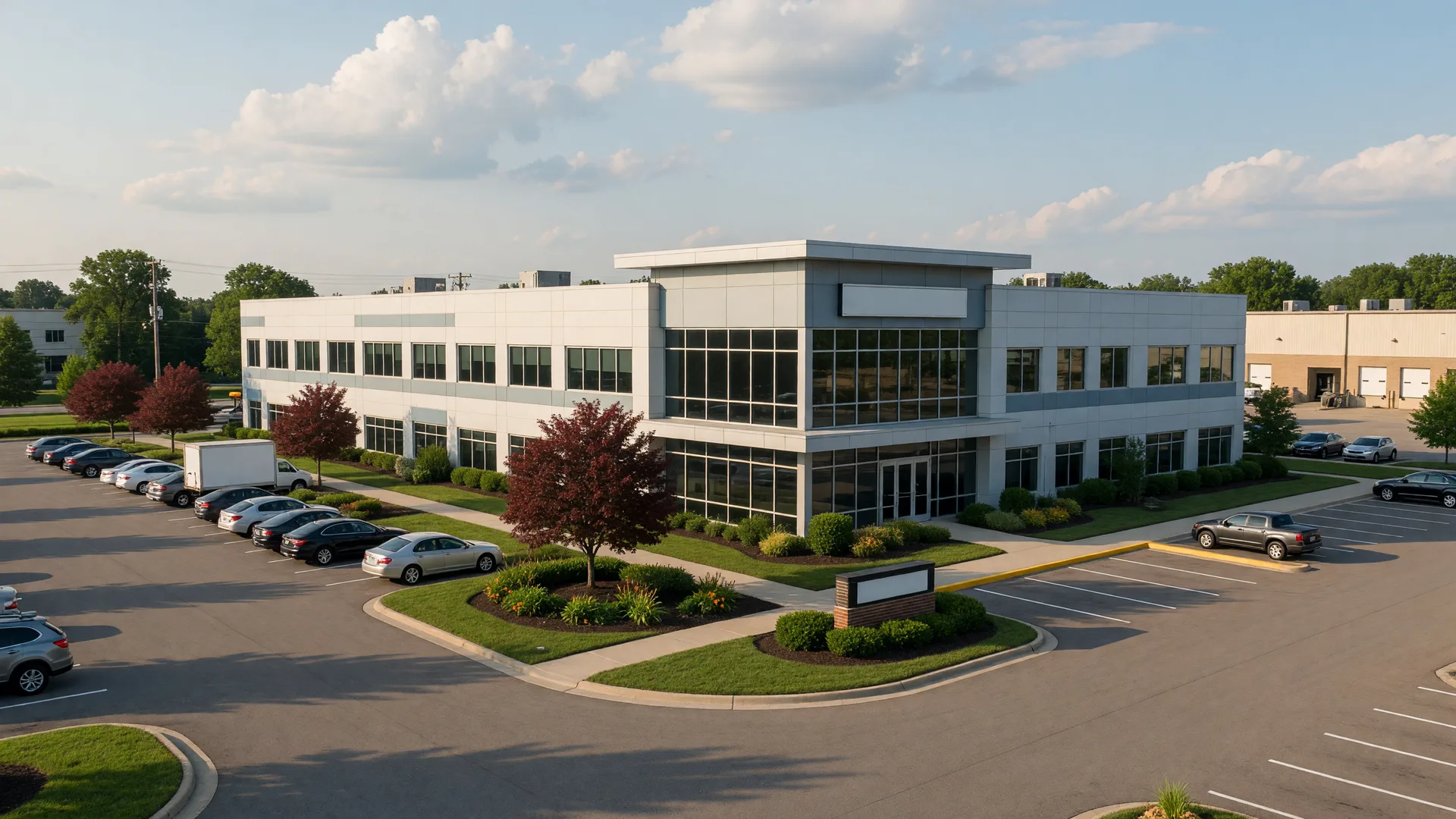
Selling commercial assets and business inventory at auction in Ohio is a practical strategy for business owners who need to convert property, equipment, and inventory into cash on a defined timeline. Whether you own a manufacturing facility in Strongsville, a retail property in Westlake, or a commercial building in Medina, auction gives you a transparent process with a clear end date.
Here is how commercial asset auctions work, what types of business assets can sell, and why owners across Northeast Ohio choose this approach for retirement, relocation, or business transition.
What Are Commercial Asset Auctions?
A commercial asset auction is a professionally managed sale where business real estate, equipment, inventory, and other assets are marketed and sold to qualified buyers through competitive bidding. Unlike a traditional commercial real estate listing that can take months or years, an auction runs on a defined timeline, typically 30 to 45 days from marketing launch to sale day.
The auction format works well for commercial assets because it creates urgency among buyers. When qualified bidders know there is a specific date and time for the sale, they act. They complete their due diligence, secure their financing, and show up ready to bid. For the seller, this means less waiting and more certainty.
According to the National Auctioneers Association, commercial and industrial auctions account for a significant share of the auction industry's annual transaction volume. The format is used across the country for office buildings, industrial facilities, retail properties, and mixed-use commercial assets.
Types of Commercial Assets That Sell at Auction
Auction is well suited for a wide range of commercial assets. Heres what typically sells through auction in Northeast Ohio:
- • Commercial real estate: Office buildings, retail storefronts, industrial facilities, warehouses, mixed-use properties, and vacant commercial land.
- • Business inventory: Wholesale goods, retail stock, raw materials, and finished products ready for sale.
- • Industrial equipment: Manufacturing machinery, assembly line equipment, forklifts, conveyors, and production tools.
- • Office furniture and fixtures: Workstations, desks, conference room furniture, shelving, lighting, and commercial kitchen equipment.
- • Vehicles and fleet assets: Commercial trucks, vans, trailers, construction vehicles, and company cars.
- • Farm and agricultural assets: Tractors, harvesters, irrigation equipment, livestock, and farmland.
The flexibility of auction means you can sell these assets individually, in lots, or all together, depending on what best serves your goals. For a full breakdown of how auction compares with traditional methods, see our comparison of auction vs traditional listing in Ohio.
When Business Owners Choose Auction
Business owners in Westlake, Rocky River, Bay Village, Avon, Avon Lake, North Olmsted, Olmsted Falls, Fairview Park, Lakewood, Strongsville, Brunswick, and Medina turn to auction for several common scenarios:
Retirement and business transition. After decades building a business, the owner is ready to retire. The commercial property, equipment, and inventory all need to sell. An auction consolidates everything into one sale with one timeline. Instead of listing the property with one agent and selling equipment piecemeal, the entire business asset portfolio sells at once.
Business relocation. A growing company in Strongsville or Brunswick moves to a larger facility. The old building, outdated equipment, and surplus inventory need to liquidate. Auction converts those assets to cash quickly so the business can reinvest in its new location.
Partnership dissolution. When business partners go separate ways, the assets need to divide. An auction provides a transparent, market-driven valuation. Every bid is public. Every buyer is qualified. The outcome is clear, which reduces disputes among partners.
Estate and probate for business assets. When a business owner passes away, the estate often includes commercial real estate, equipment, and inventory. Executors in Cuyahoga and Lorain County use auction to convert these assets efficiently within the estate timeline. For more on estate property sales, read our guide to selling an estate property in Northeast Ohio.
Debt resolution and lender-ordered sales. Banks and lenders sometimes require an auction to recover against collateral. The auction process provides a transparent, arms-length transaction that satisfies regulatory requirements and produces fair market value.
The Commercial Auction Process
The commercial auction process follows the same basic structure as a real estate auction, with some important differences in how assets are evaluated, marketed, and sold.
1. Consultation and asset evaluation. The auctioneer meets with the business owner, reviews the commercial property, inspects the equipment and inventory, and discusses goals. For commercial properties, this includes reviewing lease agreements, environmental reports, zoning restrictions, and any liens or encumbrances. For equipment and inventory, it involves cataloging, condition assessment, and valuation.
2. Auction format selection. Commercial auctions use the same formats as residential ones. A reserve auction sets a minimum acceptable price. An absolute auction sells to the highest bidder regardless of amount. A minimum bid auction sets a starting threshold and lets the market decide. Most commercial sellers in the Westlake area prefer a reserve structure that keeps them protected on the downside while still creating competitive bidding.
3. Marketing and buyer outreach. Commercial asset marketing targets a different audience than residential properties. The campaign includes industry-specific trade publications, commercial real estate databases, direct outreach to business brokers and investors, signage on the property, and digital advertising aimed at commercial buyers. For equipment and inventory, marketing often targets competitors, suppliers, and industry insiders who already understand the value of the assets.
4. Due diligence period. Potential buyers review financial statements, property condition reports, environmental assessments, and equipment appraisals. The auctioneer coordinates these materials and makes them available in a virtual data room. For commercial real estate, buyers typically complete inspections and secure financing during this period.
5. Auction day. Bidders register, verify their credentials, and place bids. Commercial auctions can be conducted live, online, or as a hybrid of both. The auctioneer manages the bidding, announces each bid, and declares the winning bid. A buyer's premium, typically a percentage of the final bid, is standard practice and disclosed in advance.
6. Closing and asset transfer. For commercial real estate, closing typically occurs within 30 to 45 days after the auction. Buyers at commercial auctions often bid with fewer contingencies than in a traditional commercial transaction, which means faster closings. Equipment and inventory are typically paid for and removed within a defined pickup window.
How Auction Sells Commercial Assets Faster
The most common question business owners ask is whether auction can achieve fair value for commercial assets. The answer depends on the quality of the assets, the marketing campaign, and the buyer pool. But the data consistently shows that competitive bidding often produces results at or above fair market value, especially when multiple qualified buyers compete for the same asset.
Here is a comparison of how auction and traditional commercial listings typically compare:
| Factor | Traditional Sale | Auction |
|---|---|---|
| Timeline | 6 to 18 months | 30 to 45 days |
| Pricing certainty | Subject to negotiation | Market sets price on sale day |
| Marketing reach | MLS, broker network | Trade publications, investor lists, digital |
| Buyer motivation | Passive inquiries | Defined deadline drives action |
| Contingencies | Inspection, financing, appraisal | Fewer contingencies, faster close |
| Seller control | Limited after listing | Seller sets terms and reserve |
The defined timeline of an auction is often the most valuable difference for business owners. When you need to convert assets into cash by a specific date, auction gives you certainty that a traditional listing cannot match.
What Business Owners in Northeast Ohio Should Know
If you own a commercial property or business in Westlake, Strongsville, Brunswick, Medina, or anywhere in the 12 communities John serves, auction is worth exploring as part of your exit strategy. It is not a last resort. It is a strategic choice that gives you control over the timeline and transparency into the price.
The key is working with an auctioneer who understands commercial assets. Commercial property valuation requires knowledge of zoning, lease structures, environmental regulations, and market comparables. Equipment and inventory valuation requires familiarity with industry standards, depreciation, and buyer demand. John C. Froelich offers commercial auction services specifically designed for business owners in Northeast Ohio.
For more on how auction compares with traditional real estate sales, see our detailed breakdown of how much it costs to auction a house or commercial property in Ohio.
Our services page explains the full range of what we handle, from traditional listings to real estate auctions, estate liquidations, and commercial asset sales.

The Bottom Line for Business Owners
Commercial assets auctions are not a sign that a business is failing. They are a professional tool used by successful businesses to manage transitions, liquidate surplus assets, and convert equity into cash. The auction process gives you a defined timeline, a transparent pricing mechanism, and a single coordinated plan for selling commercial real estate, equipment, inventory, and vehicles.
For business owners in Westlake, Rocky River, Bay Village, Avon, Avon Lake, North Olmsted, Olmsted Falls, Fairview Park, Lakewood, Strongsville, Brunswick, and Medina, auction offers a path that is faster and more predictable than piecemeal sales. And when your assets are worth more sold together than apart, a combined commercial auction is the most efficient way to get the job done.
Frequently Asked Questions
Can I sell commercial real estate and business inventory together at auction?
Yes. A combined auction lets you sell commercial property, equipment, inventory, and business assets in one coordinated sale. This approach saves time and reduces the cost of managing separate sales. The auctioneer handles all the marketing, buyer qualification, and sale management under one plan.
How long does a commercial asset auction take from start to finish?
The marketing campaign typically runs 30 to 45 days from the initial consultation to auction day. Closing on the real estate happens within 30 to 45 days after the auction. Equipment and inventory are usually paid for and removed within a short pickup window. The entire process typically takes 60 to 90 days.
What types of businesses use auction to sell assets in Northeast Ohio?
Businesses of all types use auction. Manufacturing companies sell machinery and facilities. Retail businesses sell inventory and store fixtures. Restaurants sell commercial kitchen equipment. Construction companies sell heavy equipment and fleet vehicles. Farms sell agricultural land, equipment, and livestock. Professional firms sell office furniture and leasehold improvements.
Are commercial auctions suitable for businesses that are still operating?
Yes. Many commercial auctions happen while the business continues operating. The auctioneer works with the business owner to schedule the marketing campaign and auction day around operations. For businesses that are closing, the auction typically happens after the final inventory is produced but while the equipment is still in place and accessible for buyer inspections.
Does John Froelich handle commercial auctions in Strongsville, Brunswick, and Medina?
Yes. John serves the full 12-community area including Westlake, Rocky River, Bay Village, Avon, Avon Lake, North Olmsted, Olmsted Falls, Fairview Park, Lakewood, Strongsville, Brunswick, and Medina. He also handles commercial assets across greater Northeast Ohio. Contact him to discuss your specific asset and location.
If you own a business or commercial property and are considering an auction, a consultation can help you understand the options. There is no cost and no obligation.
Contact John FroelichBest wishes,
John C. Froelich, CAI, AARE, AMM