
How Does an Auctioneer Define the Buyer Pool in a Bankruptcy Asset Auction Ohio?
The auctioneer's work starts before anything is advertised or listed. Each asset is analyzed for what it is, what condition it is in, and who would realistically pay to own it. Machinery and equipment draw one kind of buyer, tooling and spare parts another, and inventory and vehicles yet others. The auctioneer builds a profile for every asset class: local and regional buyers who want the assets nearby, trade buyers who will use them in their own operations, and end users who will put them to work directly.
Dealers and refurbishers matter here too, because they often resell exactly what an estate is trying to convert to cash. Once the likely buyer pool is defined, everything else follows from it: which channels to advertise on, who to call directly, how to describe the assets, and how to structure the lots. Competition is only possible when the right people know the sale exists, and the right people are found by working backward from the assets themselves.
How Are Bankruptcy Assets Cataloged and Presented to Bidders?
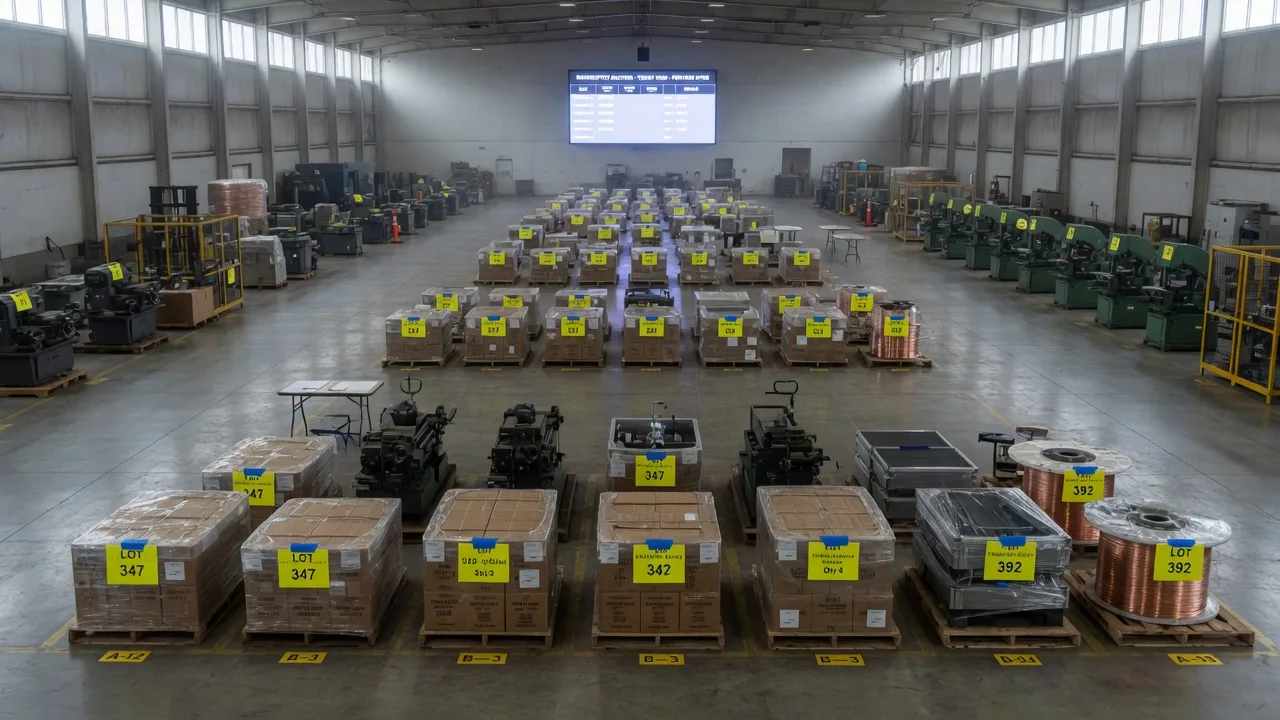
Cataloging turns a crowded facility into a set of lots a bidder can evaluate. Every item is inventoried, photographed, and described with enough detail to support a decision: make, model, serial number, age, condition, and any obvious defects. The auctioneer documents what is actually there, tags each lot, and writes descriptions that highlight value without overstating condition. A buyer sitting in another state should be able to read the catalog and make a confident judgment about what the asset is worth to them.
Presentation matters as much as documentation. Assets are staged so they can be seen, walked around, and inspected, and descriptions explain how the equipment was used, what it is capable of, and what a buyer receives. The clearer the catalog, the more bidders can evaluate from a distance, and the less uncertainty they have to discount into their bid.
How Is a Targeted Marketing Campaign Built Around the Buyer Pool?
Once the buyer pool is defined and the catalog is in hand, the marketing campaign is built around that pool rather than broadcast to everyone. The auctioneer selects the channels the identified buyers actually use: industry marketplaces where the equipment is traded, paid campaigns targeted by asset type and geography, registered bidder lists from prior sales, and email outreach to subscribers who have bought similar assets before.
Direct outreach is a core part of the campaign. Known buyers, trade groups, dealers, and end users who fit the profile are contacted individually with the catalog and the sale details. Listings and notices follow: the auction is listed on the platforms where buyers search, and any required notices are published on the schedule the case requires. Marketing for a bankruptcy asset auction Ohio campaign is coordinated and measured, and every element is designed to put qualified bidders in front of the assets.
How Do Auctioneers Reach Local, Regional, and National Buyers?
The reach of a campaign follows the assets and their markets. Local buyers are reached through the auctioneer's Ohio network and local advertising. Regional buyers come in through dealer and end-user lists in the surrounding states. When the assets justify it, campaigns extend to national buyers through industry platforms and specialized channels that serve the trade.
The right mix depends on each estate, and the auctioneer keeps the reach proportionate to the assets. The same discipline applies at every level: identify the buyers, qualify them, get them to preview the assets, and let them bid.
How Does Online Bidding Broaden the Field of Qualified Bidders?
Online bidding platforms let qualified bidders register, review the catalog, and compete from anywhere, which broadens participation beyond the local area and often beyond the region. A buyer can bid from across the country without traveling to inspect, then complete payment and removal through the published terms.
Remote participation changes the character of competition. When a sale is live online, bidders see the same catalog, the same increments, and the same closing schedule, and the platform records the bidding transparently. More bidders means more chances for assets to find the party who values them most, which is exactly what supports a competitive outcome for the estate.
How Do Inspections and Previews Support Confident Bidding?
Scheduled inspection windows and previews give bidders the chance to verify condition before they bid. The auctioneer opens the facility at set times, makes the assets accessible, and answers questions on the spot, so a bidder can confirm that the machine runs, the inventory matches the catalog, and the terms match what was promised.
Previews protect both sides. Bidders bid with confidence instead of uncertainty, and the estate is protected because buyers cannot later claim they were surprised by the condition. The more clearly condition is established before the sale, the more decisive bidding tends to be during it.
Why Does Individual, Grouped, and Bulk Lot Structure Matter?
How the auctioneer structures lots is one of the most consequential decisions in the campaign. Selling items individually opens the sale to the widest range of bidders, which can be the right call for common equipment and inventory with a broad market. Grouping complementary items into lots can preserve value that would be lost by splitting them, and it can attract buyers who want a complete setup rather than a single piece.
Bulk packages take this further, offering the bundle as a whole to buyers who see an operating opportunity: a buyer who wants the full package can bid more aggressively for it than for pieces. Lot structure shapes the buyer pool, the size of individual bids, and the total outcome, so the auctioneer designs it around what the assets are and who is most likely to want them.
What Auction Terms Protect Bidders and the Estate?
Clear terms are the foundation of a defensible auction. Bidder registration confirms who is bidding and that they accept the published rules. Deposits demonstrate that bidders are serious and that the estate has recourse if a winning bidder defaults. A buyer premium, when used, is disclosed in advance so every bidder prices it into their bid. Reserves, when they apply, are set with the trustee and communicated appropriately so the estate is not forced to accept a price its representatives decided in advance to reject.
Payment deadlines, removal timelines, and as-is terms are spelled out the same way. The federal bankruptcy system places the trustee's asset administration within a defined framework, as the United States Courts explain in Bankruptcy Basics. The same rules for every bidder protect both the bidders and the estate, and they make the sale's outcome harder to attack later.
How Does Competitive Bidding Develop During the Auction?
When the sale opens, the mechanics of bidding take over. Bid increments are set so the pace of bidding is steady without stalling the sale, and each increment is transparent so every bidder knows exactly where the price stands. Opening bids are positioned realistically: low enough to invite participation, yet structured around the value the analysis suggested.
Live and extended bidding each shape competition differently. In a live sale, the auctioneer reads the room, keeps the pace moving, and gives bidders the moments of decision that create momentum. Extended bidding, used in online sales, automatically adds time when a bid arrives near the close, so a late bidder cannot snipe the lot and new bidders can respond. That extension dynamic is what lets competition genuinely develop, because the person who wants the asset most gets the chance to prove it.
How Does the Auctioneer Document Results for the Trustee?
The auctioneer's job does not end at the close of bidding. Post-auction settlement reconciles the day: winning bidders, sold lots, sale prices, buyer premiums, deposits, and outstanding balances are accounted for item by item. The auctioneer prepares an itemized results report the trustee can use, and coordinates the transfer of title or proceeds in the manner the case requires.
The trustee's duty to administer and distribute estate assets is the anchor for this record keeping, as federal bankruptcy court resources on the trustee's role in a bankruptcy case describe. A complete file, including the catalog, bidder records, results by lot, and settlement documentation, gives the trustee a clear and defensible record of how estate assets were converted to cash.
Frequently Asked Questions
What does an auctioneer do to create competition in a bankruptcy asset auction Ohio?
The auctioneer defines the buyer pool, catalogs and presents the assets, runs a targeted marketing campaign, opens online bidding, schedules inspections and previews, structures the lots, sets clear terms, and manages bidding increments so qualified buyers can compete. Targeted exposure and competitive bidding can help support recovery for the estate, depending on the assets and the circumstances.
How are lots structured in a bankruptcy asset auction?
Assets are offered individually, in groups, or as a bulk package depending on the assets and the buyer pool. Individual lots tend to draw the widest range of bidders, grouped lots combine complementary items, and bulk packages appeal to buyers who want a complete operation. Lot structure directly shapes how competition develops.
How do online bidding and inspections work together in a bankruptcy auction?
Online bidding lets qualified bidders register and compete remotely, broadening participation beyond the local area. Scheduled inspection windows and previews let bidders verify condition before the sale opens. Together they give more buyers the confidence to bid.
What terms do bidders and the estate agree to in a bankruptcy auction?
Registration confirms bidder identity and acceptance of the published rules. Deposits, buyer premium, reserves, payment deadlines, and removal schedules are disclosed in advance. Clear terms create the same rules for every bidder and protect both bidders and the estate.
Does competitive bidding guarantee the highest price for bankruptcy assets?
No. Competitive bidding documents what the market will pay on the sale date, and no auctioneer can guarantee a particular price or outcome. Targeted exposure and competitive bidding can help support recovery for the estate, depending on the assets and the circumstances.
If you are an Ohio Chapter 7 trustee or bankruptcy attorney preparing to sell business assets from an estate, we would welcome a conversation about the asset list, the likely buyer pool, and what the campaign would look like. A consultation costs nothing and requires no commitment.
Schedule a ConsultationBest wishes,
John C. Froelich, CAI, AARE, AMM