
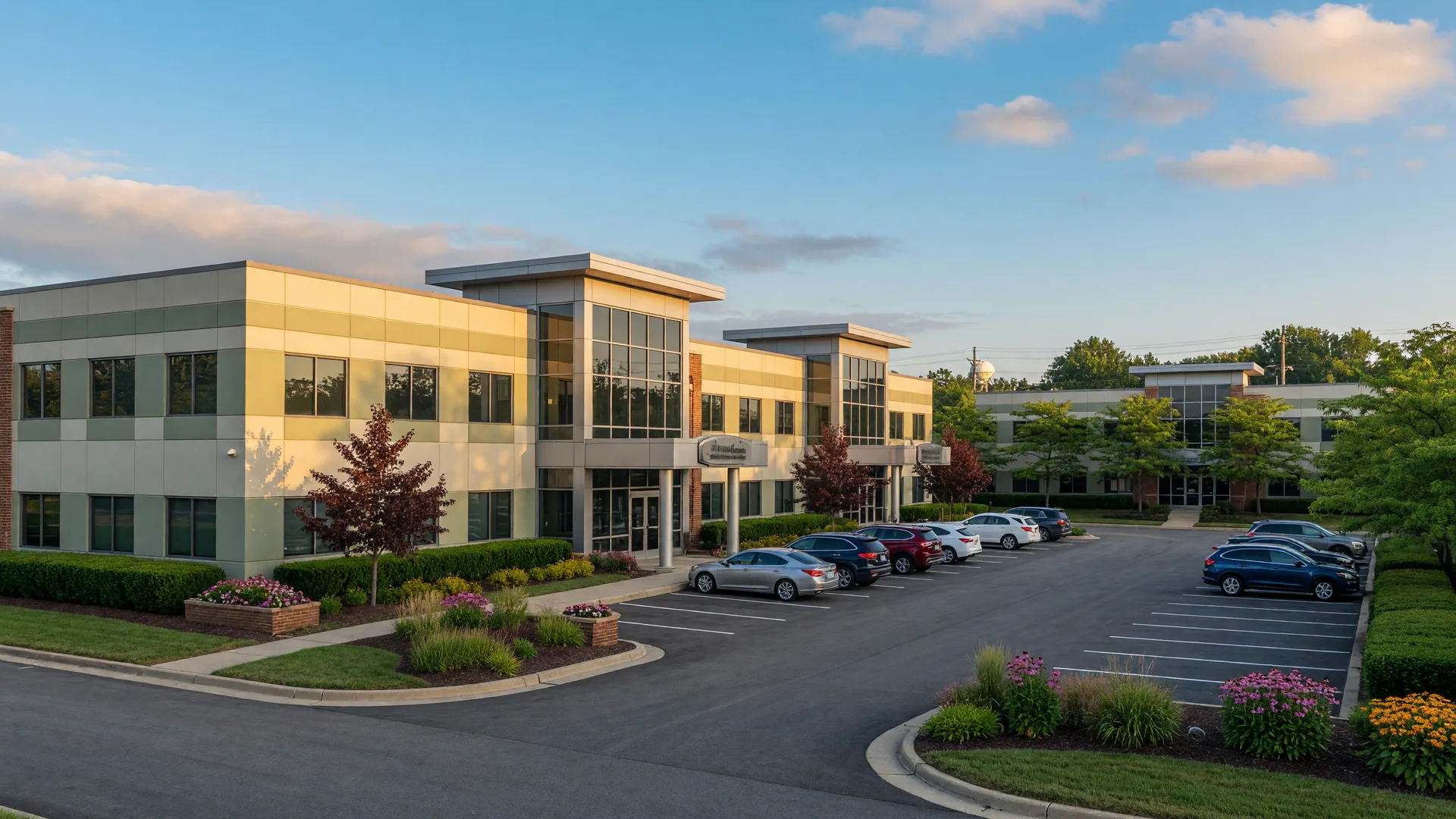
If you own commercial property, run a business with significant equipment or inventory, or are managing the estate of someone who did, you have likely faced the question of how to sell those assets efficiently. The traditional approach involves separate listing agents, multiple timelines, and the uncertainty of waiting for qualified buyers to emerge. For many owners in Northeast Ohio, there is a more direct path.
This article covers how commercial property and business asset auctions work in Ohio, what types of assets can be sold together, and why business owners across Westlake, Strongsville, Brunswick, Medina, and the surrounding communities are choosing auction as their exit strategy.
Watch: Selling Business Assets and Commercial Property at Auction
Why Commercial Sellers Turn to Auction
Every commercial sale starts with a fundamental question: how do I find the right buyer at the right price within a timeframe that works for me? For a traditional commercial listing, the answer often involves months of marketing, broker networking, and patient waiting. The property sits on the market until the right buyer comes along, and there is no guarantee that buyer will arrive on schedule.
An auction changes the dynamic. Instead of waiting for a buyer, you set a date and let the market come to you. The marketing campaign runs for a defined period, typically 30 to 45 days, during which the property and assets are promoted to a targeted audience of qualified buyers. On auction day, those buyers compete against each other, and the highest bid wins. You, the seller, set the reserve price. If the bidding does not reach that minimum, you are not obligated to sell. You stay in control.
This structure appeals to several types of commercial sellers.
- • Business owners planning retirement. After decades of building a company, the owner wants to exit cleanly and on a known schedule. An auction provides a firm closing date and a transparent process.
- • Companies relocating or consolidating. A business that is moving to a new facility needs to sell its current real estate, equipment, and inventory. An auction handles all of it in one coordinated event.
- • Estate executors and trustees. Managing a commercial portfolio after an owner's death requires a clear, court-approvable sale process. An auction provides transparency and a market-driven outcome.
- • Investors and partnerships. When a real estate partnership dissolves or an investment fund needs to liquidate holdings, auction offers speed and certainty that a traditional listing cannot match.
What Types of Commercial Assets Can Be Sold at Auction in Ohio?
One of the most common misconceptions about auctions is that they are only for distressed properties or estate sales. In reality, commercial auctions in Ohio cover a wide range of asset types, and many sellers choose auction specifically because it can bundle different classes of assets together.
Common commercial asset categories sold at auction in Northeast Ohio include:
- • Commercial real estate. Office buildings, retail storefronts, medical and professional office condos, warehouse and distribution facilities, industrial properties, self-storage facilities, and commercial land parcels.
- • Business equipment and machinery. Manufacturing equipment, CNC machines, construction equipment, kitchen and restaurant equipment, medical devices, and printing or production machinery.
- • Inventory and stock. Retail inventory, wholesale goods, building materials, and surplus stock from business closure or consolidation.
- • Fleet vehicles and heavy equipment. Commercial trucks, cargo vans, forklifts, skid steers, excavators, and farm equipment.
- • Business assets and intellectual property. Business name rights, customer lists, domain names, and licenses can sometimes be included in a business asset auction, though these require specialized handling.
The ability to sell real estate and business assets together in a single auction is a significant advantage for business owners who want a clean break. Instead of managing separate sales for the building, the equipment, and the inventory, everything happens on the same timeline with the same auctioneer. For a deeper dive into how this works, see our article on what happens when you sell real estate and personal assets at auction.
How a Commercial Auction Works in Ohio
The commercial auction process in Ohio follows a structured, time-bound framework that is overseen by a licensed auctioneer. Here is how it typically unfolds.
Step 1: Consultation and strategy. The auctioneer meets with the seller to understand the assets, the desired timeline, and the seller's goals. This is where the auction format (live, online, or simulcast) is chosen and a reserve price is discussed. The auctioneer also evaluates whether bundling or splitting assets into multiple lots would produce the best outcome.
Step 2: Marketing campaign. Commercial auction marketing is intensive and targeted. The property and assets are professionally photographed, described in detail, and listed on auction platforms, commercial real estate sites, and industry-specific channels. Buyer leads are qualified to ensure only serious, pre-approved participants register to bid. For commercial and industrial assets, this often includes outreach to business brokers, industry associations, and direct buyer lists.
Step 3: Preview and due diligence. Prospective buyers are given the opportunity to inspect the property and assets. This can happen through scheduled open houses, private appointments, or virtual tours. During this period, buyers review any available financial records, equipment maintenance logs, property condition reports, and environmental assessments. Sellers are encouraged to make as much information available as possible. Transparency attracts higher bids.
Step 4: Auction day. Bidding takes place at the scheduled time. In a live auction, bidders gather in a room or at the property. In an online auction, they bid through a secure platform over a set period. Simulcast auctions combine both formats. The auctioneer manages the pace, announces bids, and drives competition. If the reserve price is met, the highest bidder wins. If it is not, the seller has the option to negotiate with the highest bidder after the auction or walk away.
Step 5: Closing. The winning bidder signs a purchase agreement immediately after the auction. An earnest money deposit is collected, typically 5 to 10 percent of the purchase price. The closing process then proceeds, usually within 30 to 90 days depending on the complexity of the transaction and any financing contingencies.
For a broader overview of how auction compares to traditional methods, read traditional listing vs. real estate auction: which sale method fits your property.
Commercial Auctions in Westlake and Northeast Ohio
Westlake, Ohio is home to one of the region's most significant commercial districts. Crocker Park, the 120-acre mixed-use lifestyle center on Detroit Road, draws national retailers, professional offices, and luxury residences across its 20-block footprint. The city also hosts major corporate headquarters including Nordson Corporation, Hyland Software, American Greetings, and the Scott Fetzer Company. Westlake's commercial real estate market reflects this activity, with office, retail, and industrial properties regularly changing hands.
Beyond Westlake, the broader Northeast Ohio commercial market includes established business corridors across the 12 communities I serve. Strongsville's Pearl Road corridor and SouthPark Mall area host significant retail and office properties. Brunswick offers developing commercial districts along Route 303 and Pearl Road. Medina's historic square and expanding commercial zones attract a mix of retail, professional, and mixed-use investment. Industrial properties in North Olmsted, Avon, and Avon Lake serve the region's manufacturing and distribution sectors.
For each of these markets, auction offers a practical alternative to the traditional commercial listing process. When a commercial property has sat on the market for months without a serious offer, an auction resets the timeline and creates urgency. When a business owner needs to sell equipment, inventory, and real estate together, auction bundles everything into one manageable process. And when an estate or trust needs to liquidate commercial holdings, auction provides a transparent, market-driven result that can be documented for court approval.
When Does an Auction Make More Sense Than a Traditional Commercial Listing?
The choice between auction and traditional listing depends on the specific asset, the market conditions, and the seller's priorities. Traditional commercial listings work well when the seller has time to wait for the right buyer, is willing to negotiate price over an extended period, and wants to test the market at a specific asking price. For many commercial properties, especially well-located office and retail space in active markets, this remains the standard approach.
Auction makes more sense in several distinct scenarios:
- • Time is a factor. If you need to close by a specific date, auction guarantees that the sale process ends on schedule. There is no indefinite waiting period.
- • The asset is unique or specialized. Niche commercial properties, industrial facilities, and specialized equipment attract a smaller pool of buyers. Auction marketing reaches those buyers directly and creates a competitive environment that drives value.
- • You want to bundle assets. Selling real estate, equipment, and inventory in one auction attracts bidders who see the full package as an operational business opportunity. This can produce a higher total price than selling each piece separately.
- • Transparency matters. For estate executors, trustees, and partnership dissolutions, an auction provides a clearly documented, market-driven price that can stand up to scrutiny from beneficiaries, co-owners, or the court.
- • The traditional listing has stalled. If a commercial property has been on the market for months with minimal showings or no offers, an auction changes the dynamic. The deadline forces action from potential buyers who have been waiting on the sidelines.
For a real-world example of how an auction turned a stalled listing into a successful sale, read the story of a Westlake luxury home that sold in under 30 days after switching to auction. The same principles apply to commercial properties.
The Credentials That Matter for Commercial Auctions
Selling commercial real estate and business assets at auction requires more than a gavel. It requires understanding of commercial property valuation, business asset marketing, Ohio auction law, and the ability to attract qualified bidders from the right industries. John C. Froelich holds the CAI (Certified Auctioneers Institute), AARE (Accredited Auctioneer of Real Estate), and AMM (Accredited in Marketing Management) designations, placing him among the top tier of trained professional auctioneers. With more than $20 million in real estate and assets sold, including commercial properties, business liquidations, and estate auctions, he brings hands-on experience to every commercial engagement.
John is licensed in Ohio as both a Realtor (License 2011001993) and an auctioneer (License 2010000128). This dual license means he can represent commercial sellers through either a traditional listing or an auction, and can advise on which path fits the specific asset and timeline. For more on what sets this level of expertise apart, read about what a real estate auctioneer actually does.
Preparing Commercial Assets for Auction
Getting the best results from a commercial auction starts with preparation. For real estate, this means gathering property condition reports, environmental assessments, recent appraisals, tax records, lease agreements, and income statements if the property is rented. Buyers in a commercial auction expect transparency, and making this information available during the preview period builds confidence and drives higher bids.
For equipment, machinery, and inventory, preparation means organizing maintenance records, service histories, and detailed lists of what is included. Items should be cleaned, tagged, and organized for inspection. The easier it is for a buyer to understand what they are bidding on, the more comfortable they will be competing for it.
For fleet vehicles and heavy equipment, having recent inspection reports, title documentation, and service records available eliminates buyer uncertainty and helps the auction achieve market value.
Estate executors and trustees handling commercial assets should also consult with legal and tax advisors before the auction to understand how the sale proceeds will be distributed and whether any special filings are required.
The Bottom Line on Commercial Auctions in Ohio
Commercial property and business asset auctions are not a niche strategy. They are a mainstream sale method used by business owners, investors, estate executors, and institutions across Ohio to sell assets efficiently, transparently, and at market-driven prices. The auction process creates a defined timeline, attracts pre-qualified buyers, and eliminates the uncertainty of an open-ended listing.
For sellers in Westlake, Strongsville, Brunswick, Medina, and the other communities across Northeast Ohio that I serve, the choice between auction and traditional listing comes down to one question: do you want to set a price and wait, or set a date and let the market decide?
If you are considering the sale of commercial real estate, business equipment, inventory, or any combination of these assets, I would welcome the chance to walk through your options. A conversation costs nothing and gives you a clear picture of what each path looks like for your specific situation.
Frequently Asked Questions
What types of commercial properties can be sold at auction in Ohio?
Commercial real estate sold at auction in Ohio includes office buildings, retail storefronts, medical and professional office condos, warehouse and distribution facilities, industrial properties, self-storage facilities, and commercial land parcels. Business assets such as equipment, machinery, inventory, and fleet vehicles can also be included in the same auction.
How long does a commercial auction take from start to close?
The marketing campaign typically runs 30 to 45 days. After the auction, closing usually takes 30 to 90 days depending on the complexity of the transaction and any financing contingencies. From start to finish, most commercial auctions close within 60 to 120 days, which is significantly faster than the average traditional commercial listing.
Can I sell a business and its real estate together at auction?
Yes. Selling commercial real estate, equipment, inventory, and other business assets together in a single coordinated auction is one of the main advantages of this approach. Bundling assets attracts buyers who see the full package as an operational opportunity, which can result in a higher total sale price than selling each asset separately.
What if the bidding does not reach my minimum price?
You set a reserve price before the auction, which is the minimum amount you are willing to accept. If bidding does not reach that threshold, you are not obligated to sell. You can then choose to negotiate with the highest bidder after the auction, adjust the reserve for a future attempt, or pursue a traditional listing. You stay in control throughout the process.
Do I need a real estate license to sell commercial property at auction in Ohio?
Yes, Ohio law requires a licensed auctioneer to conduct a commercial real estate auction. The auctioneer must be licensed through the Ohio Department of Agriculture. John C. Froelich holds both an Ohio real estate license (2011001993) and an Ohio auctioneer license (2010000128), allowing him to handle both traditional listings and auctions for commercial properties.
If you own commercial property or business assets and are exploring your sale options, I would welcome a conversation about your situation. No pressure, no obligation. Just a clear, practical assessment of what an auction could look like for your specific assets and timeline.
Schedule a ConsultationBest wishes,
John C. Froelich, CAI, AARE, AMM