
What Information Does an Auctioneer Need From the Trustee?
The auctioneer needs a complete picture of the estate before recommending anything: an asset list identifying what is saleable, any appraisals or condition information already in hand, a summary of liens and secured interests, and a realistic sense of the timeline the case imposes. Access to the site is equally important, along with a point of contact who can let us in, point out what is what, and answer basic questions about how the business operated. The more complete the handoff, the faster the inspection and the sharper the marketing plan.
How Does the Process Start With an Initial Site Inspection and Asset Identification?
The process starts with an on-site inspection during which the auctioneer walks the facility, documents what is actually there, and sorts it into saleable categories: machinery and equipment, tooling and spare parts, raw and finished inventory, vehicles, and real estate. Serial numbers, model numbers, and condition notes are recorded asset by asset, and anything that is more liability than value, such as waste, is flagged for the trustee to handle separately. The inspection produces the working list the entire auction, and later the accounting, is built from.
What Assets Can a Chapter 7 Auction in Ohio Cover?
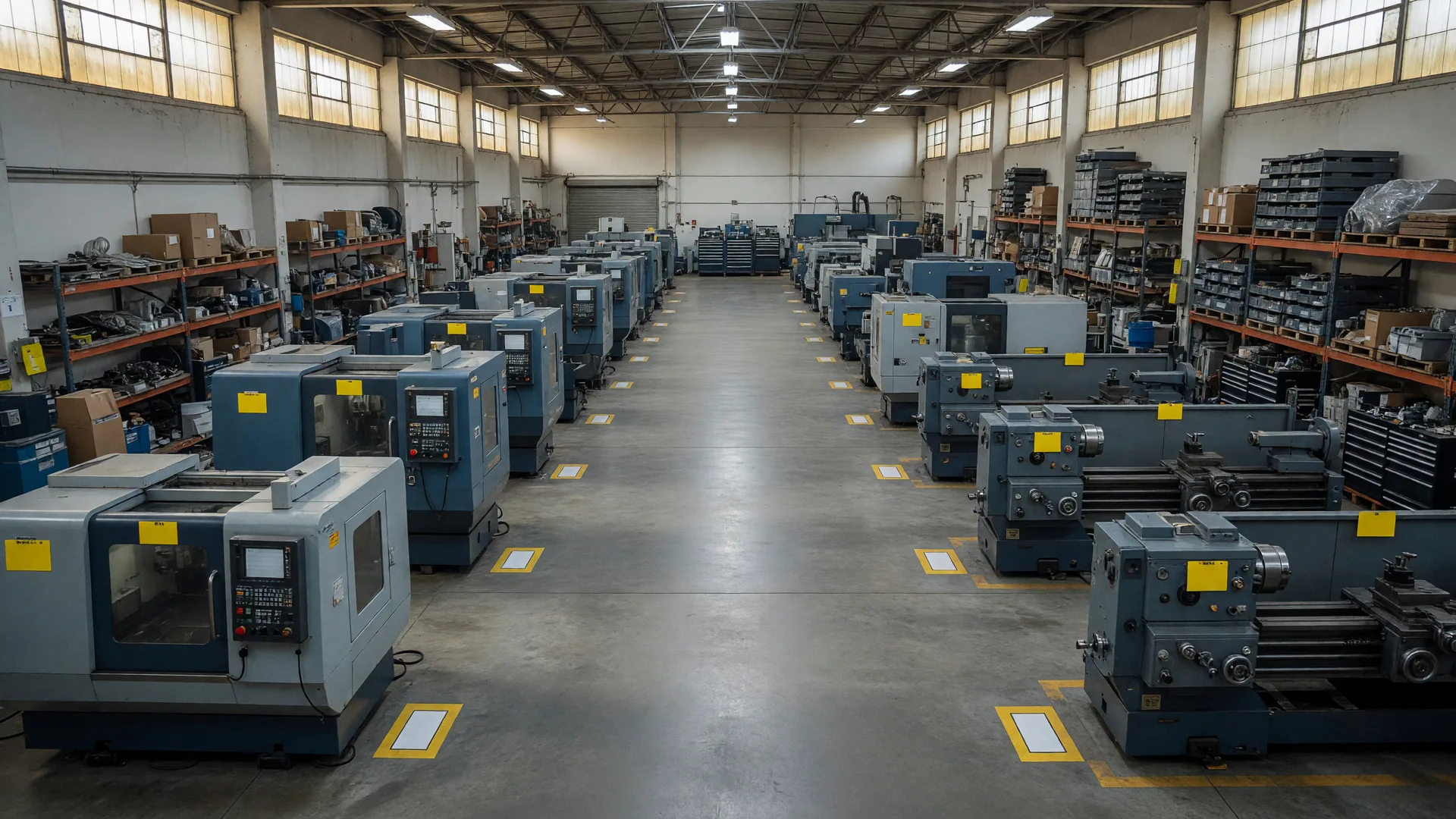
A Chapter 7 auction in Ohio may involve many types of estate property, including machinery and equipment, tooling, inventory, vehicles and commercial real estate, when the trustee and counsel determine those assets may appropriately be sold. Each class has its own market and its own marketing approach, and each is handled according to the terms the trustee proposes and the court approves. The trustee decides what is sold and how. The auctioneer organizes it into a catalog that bidders can understand, inspect, and bid on with confidence.
How Are Specialized Assets and Their Buyer Markets Identified?
Specialized assets are identified by matching the equipment's type, make, model, condition, and industry to the buyer markets that actually trade those machines. A CNC machining center draws a different pool of buyers than a packaging line or a commercial building, and the auctioneer's job is to know which dealers, end users, and platforms serve each category. When a buyer pool is thin, the market may be regional or national even though the asset sits in Ohio, and the marketing plan has to reach where the buyers actually are, not just where the facility happens to be.
How Should a Trustee Weigh Auction Versus a Private Sale?
A trustee should weigh auction against a private sale case by case, because each method has strengths and neither is always superior. A private sale can make sense when a known, funded buyer already exists, when speed is the priority, or when the asset has a value that is easy to confirm. An auction can make sense when no reliable asking price exists, when broad exposure matters, or when a transparent, documented competitive result is valuable for the record. The trustee and counsel determine which method to pursue, subject to applicable bankruptcy law, notice requirements, court procedures, and any required court authorization.
How Is a Bankruptcy Auction Marketing Plan Developed?
A bankruptcy auction marketing plan is developed around the specific assets and their buyer markets, beginning with clear descriptions, professional photography, video walkthroughs, and condition reports that give bidders a reason to travel. From there the plan schedules advertising to registered buyer lists, industry marketplace platforms, and targeted campaigns by machine type and geography. It also fixes the practical details: when bidding opens and closes, whether minimum bids or reserve amounts are in place, deposit and payment terms, and the removal timeline, all consistent with the applicable or approved sale procedures.
How Does Bidder Outreach Reach Local, Regional, and National Buyers?
Bidder outreach reaches local buyers through the auctioneer's Ohio network and local advertising, regional buyers through dealer and end-user lists across the surrounding states, and national buyers through industry platforms and direct outreach to the specialists who trade the equipment in question. The right mix depends on the assets. Machinery and equipment auction Ohio campaigns frequently lean regional and national, while vehicles and inventory may draw well locally. Every campaign relies on the same discipline: identify the buyers, qualify them, get them to preview the assets, and let them bid.
How Are Auction Terms and Sale Procedures Established?
Auction terms and sale procedures are established to align with the court-approved bid procedures and the requirements of Rule 6004, including notice to creditors and time for objections. The terms spell out how bids are submitted, what deposit is required, whether a buyer's premium applies, whether assets are sold as-is, who handles removal and when it must be completed, and what happens if a buyer defaults. Bidders register and accept the terms before the sale opens. A clean, enforceable set of terms protects the estate and gives every bidder the same rules.
How Do the Auctioneer, Trustee, Counsel, and Court Coordinate?
The auctioneer, trustee, counsel, and court coordinate through a defined chain: counsel prepares the motions and notices, the trustee holds the authority to act for the estate, the court approves the process, and the auctioneer executes within that approved framework. From the first consultation through the final report, the auctioneer communicates schedule changes and material facts to the trustee and counsel in time for decisions to be made at the right level. The division of roles is what keeps the sale defensible: the auctioneer is a marketing and execution specialist, and the legal decisions stay with the trustee and attorneys.
How Is Asset Inventory and Accountability Maintained During the Sale?
Asset inventory and accountability are maintained through a numbered catalog that tracks every item from inspection through pickup. Bidders sign for previews, winning bidders sign acknowledgments at the close, and each removal is verified against the lot list before anything leaves the site. The running record supports the trustee's duty to account for estate property under 11 U.S.C. section 704, and it gives the estate a precise paper trail for every transaction. Nothing is sold off the record, and nothing leaves the building without a matching entry.
What Reporting Does an Auctioneer Provide Under Bankruptcy Procedures?
Depending on the case and applicable or approved sale procedures, auction documentation may include an itemized catalog and results, bidder and deposit records, winning-bid documentation, applicable notices or affidavits, and settlement information showing proceeds and authorized expenses.
The specific reporting required can vary by case. The trustee and counsel determine what documentation is necessary for the estate and any required court filings, while the auctioneer provides the records generated through the auction process.
How Do Buyer Payment and Asset Removal Work After the Auction?
Buyers pay according to the published terms, typically at the close of the sale or within a stated window, and assets are released only after funds are verified. Removal happens on a set schedule approved by the trustee, with signed pickup documentation matched against the catalog and security coordinated with the facility. The auctioneer manages the logistics and resolves the ordinary questions, while anything that affects the estate, such as a default or a dispute, goes straight to the trustee and counsel. When the process runs cleanly, the estate converts assets into cash on a timeline everyone knew in advance.
How Are Real Estate and Business Assets Sold Together in One Campaign?
Real estate and business assets are sold together in one campaign when the trustee and counsel decide a combined sale serves the estate, which may be considered when the facility and its contents could appeal to buyers as an operating or substantially equipped property. The auctioneer can group the plant real estate, machinery, inventory, and vehicles into lots, sell them in a single coordinated event, and manage the overlap between the real estate closing and the removal of personal property. Our commercial auction services for equipment and business assets and our estate and asset liquidation services follow the same standard: accurate records, transparent bidding, and a clean settlement for whoever holds the authority to sell.
Frequently Asked Questions
What does an auctioneer need from a Chapter 7 trustee before assessing assets?
The auctioneer needs a saleable asset list, condition and appraisal information if available, a summary of liens and secured interests, site access, a point of contact, and a realistic timeline. With that information, the auctioneer can inspect the assets and recommend whether and how auction fits the estate.
What assets can be sold in a Chapter 7 bankruptcy auction in Ohio?
Any nonexempt asset of the estate can be sold, including machinery and equipment, tooling and spare parts, raw and finished inventory, fleet vehicles, and commercial real estate. What is sold, and how, is determined by the trustee and counsel within the framework the court approves.
When does an auction make sense for a trustee versus a private sale?
An auction can make sense when no reliable asking price exists, when broad exposure is needed, or when a transparent, documented competitive result benefits the record. A private sale can make sense when a known, funded buyer exists or speed is the priority. Neither is always superior, and the trustee and counsel make the call for each estate.
What reporting does an auctioneer provide in a bankruptcy auction?
Depending on the case and approved sale procedures, auction documentation may include an itemized catalog and results, bidder and deposit records, winning-bid documentation, applicable notices or affidavits, and settlement information showing proceeds and authorized expenses.
Can real estate and business assets be sold together in one auction?
Yes. Plant real estate, machinery, inventory, and vehicles can be sold in one coordinated campaign when the trustee and counsel decide a combined sale serves the estate, including managing the timing between the real estate closing and the removal of personal property.
Does an auction guarantee the highest price or maximum recovery?
No. An auction creates a defined sale date, broad marketing, and a documented competitive result, but it does not guarantee any particular price or outcome, and responsible auctioneers do not claim it does. The market decides, and the trustee and counsel evaluate the risk for each estate.
If you are an Ohio Chapter 7 trustee or bankruptcy attorney working with an estate that includes machinery, equipment, inventory, vehicles, or real estate, we would welcome the chance to talk through the assets and the practical auction options. A conversation about the asset list, the timeline, and what the marketing and reporting would look like costs nothing and requires no commitment.
Talk to JohnJohn C. Froelich, CAI, AARE, AMM