
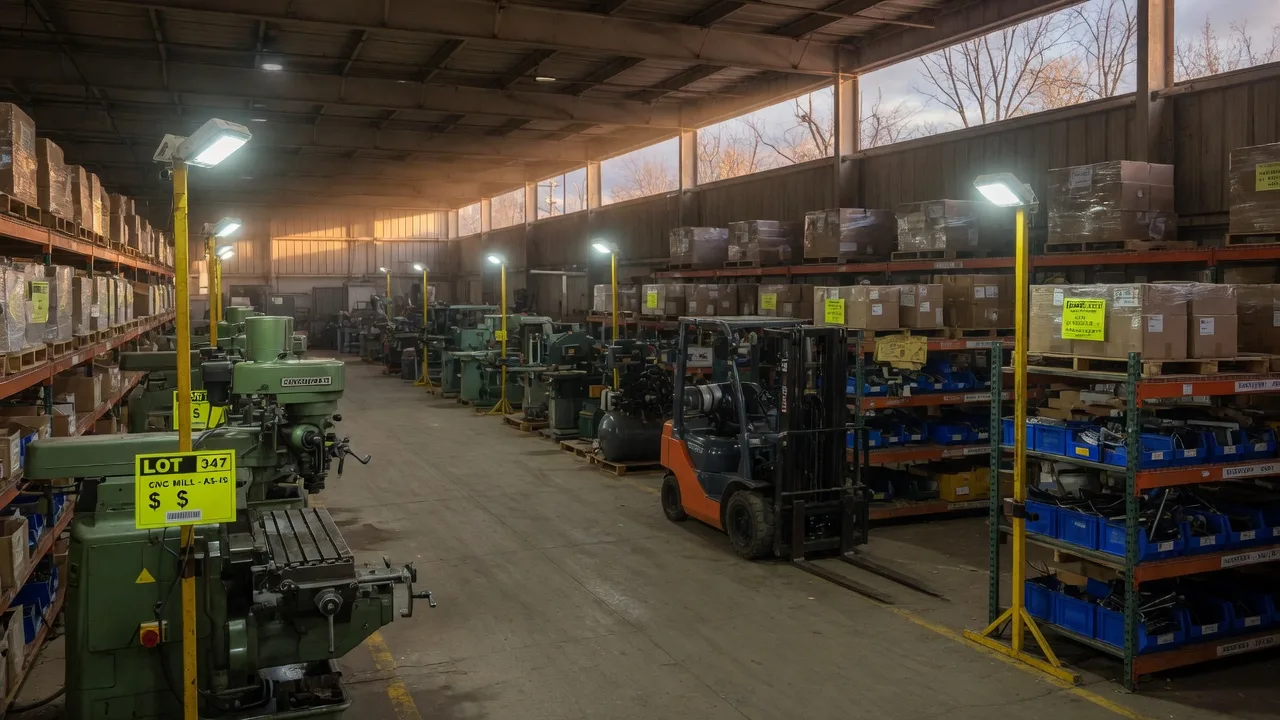
A business liquidation auction in Ohio is a licensed, public sale that turns equipment, inventory, vehicles, and commercial real estate into cash on a defined timeline. It is run by an Ohio-licensed auctioneer under Ohio Revised Code Chapter 4707, and it is the fastest honest way for a business owner to close a chapter, fund a retirement, or settle an estate. If you own a business in Westlake or anywhere across Northeast Ohio and you are thinking about selling its assets, this article is the practical playbook.
The widest part of my commercial work is with owners at a turning point: retirement, a health change, a partnership split, a lease ending, or a decision to consolidate into a smaller facility. They are often the same people I help with luxury homes, business owners, executives, and entrepreneurs who built something over decades and now want a clean, transparent exit. This article covers when a business liquidation auction fits, what it sells, and how the process runs from catalog to settlement.
A Business Liquidation Auction in Ohio: What It Is and When It Fits
The phrase business liquidation auction covers any auction sale of the assets of an operating business: the equipment on the floor, the inventory in the warehouse, the fleet in the lot, and often the real estate the business occupies. The auctioneer catalogs each lot, markets the sale to the right buyer pool, and runs open competitive bidding on a set day, with terms the seller approves before marketing begins.
When does it fit? The most common trigger is a transition. Nearly half of U.S. small-business owners are 55 or older, according to a 2025 U.S. Bank report, and Ohio is home to about 1.1 million small businesses that employ roughly 2.2 million people, about 43.8 percent of the state's workforce, per the SBA's 2025 Small Business Profile for Ohio. Retirement, a health change, a partnership split, a lease ending, or a decision to consolidate all push the same question: what is this business worth, and how do I turn it into cash cleanly?
An auction answers that question with a date. Instead of months of classified listings, lowball offers, and storage costs, a business liquidation auction runs on a defined campaign, typically 30 to 60 days from cataloging to settlement, and the market, not a single buyer, sets the price. The local numbers show just how much business activity sits in these communities: Cuyahoga County is home to more than 31,000 employer establishments supporting over 680,000 jobs, while Lorain County adds about 5,600 employer establishments and 89,000 jobs, according to U.S. Census QuickFacts.
Why Northeast Ohio Owners Choose Auction Over a Slow Sell-Off
The alternative to an auction is the slow sell-off: piece-by-piece listings, dealer offers, and the quiet dread of assets depreciating while they sit. For a business owner who is retiring, that slow path has real costs. Equipment loses value every month it sits idle. Inventory ties up capital. Insurance, rent, and utilities keep running. And dealer offers, by design, price in their own margin, which means the seller eats the spread.
An auction inverts that. The auctioneer builds a buyer pool of dealers, end users, and investors, markets each lot with professional photos and descriptions, and lets them compete. Competitive bidding is the part of the process I describe to clients as an arm wrestle to see who is willing to pay the most, and it is the reason a well-run auction so often beats a single negotiated offer.
Transparency is built in. Every lot is published, every bid is visible, and the results are documented in writing. For an estate or a business trust, that paper trail matters, because beneficiaries and heirs can see exactly what each asset brought. The same transparency is why I describe the whole approach the same way to every client: let the market decide.
What a Business Liquidation Auction Sells
Almost any business asset can be sold at auction. The most common categories in my work across Northeast Ohio:
Equipment. Machine tools, forklifts, commercial kitchen equipment, medical and dental equipment, construction machinery, and shop tools. Condition, maintenance records, and manuals drive value, and a good catalog photographs and documents each piece.
Inventory. Raw materials, finished goods, and retail stock. Inventory sells best when it is organized, counted, and described honestly, because buyers bid on what they can verify.
Vehicles. Fleet cars, trucks, trailers, and specialty vehicles. Titles, service records, and clean descriptions matter more than anything else.
Commercial real estate. Retail, office, and industrial property can sell in the same campaign or in a separate real estate auction with its own terms, including a reserve price that protects the seller's floor.
Fixtures and furnishings. Shelving, signage, desks, and the contents of the office or shop, often grouped into practical lots.
In Westlake, the businesses I see are the ones you pass every day: the shops and offices along Detroit Road and Center Ridge Road, the operators near Crocker Park and along Crocker Road, and the light industrial and service businesses tucked into the side streets. The same is true across the communities I serve, from Avon's Nagel Road corridor and Avon Lake's Lake Road to Strongsville's Pearl Road and the businesses around Medina's Public Square.
How a Business Liquidation Auction in Ohio Runs, Step by Step
Step one is the catalog. The auctioneer walks the business, photographs every lot, and builds the inventory list with descriptions and condition notes. Step two is the terms. The seller approves the reserve, the minimum opening bids, the buyer's premium, the deposit, and the settlement timeline before anything is marketed. Step three is marketing. The sale is listed on auction platforms, promoted to the buyer pool, and shared through the networks that reach dealers and end users in the right industry. Step four is the sale itself, onsite, online, or both, with open competitive bidding. Step five is settlement: payment, removal, and a written accounting of every lot.
Licensing matters here. Ohio auctioneers are licensed and regulated by the Ohio Department of Agriculture under Ohio Revised Code Chapter 4707, and Ohio currently has more than 2,700 active licensed auctioneers. Before you hand a business liquidation to anyone, verify the license, the bond, and the auctioneer's track record with the category of assets you own. I explain the credentials to look for in my article on who offers both traditional real estate sales and real estate auctions in Ohio.
The seller is in control at every step. The reserve price protects the floor, the minimum opening bid shapes the bidding, and the closing date is set in advance, which is why an auction works so well for an owner with a date to honor, whether that date is a retirement, a move, or a lease expiration.
Costs, Timeline, and What to Prepare
A business liquidation auction is not free, and the honest conversation starts with numbers. The seller typically pays a commission on the sale plus cataloging and marketing costs, and the buyer often pays a buyer's premium on top. The total depends on the size of the sale, the number of lots, and the marketing plan. I walk through the full cost picture for real estate in my article on how much it costs to auction a house in Ohio, and the same structure applies to business assets.
What should you prepare before the catalog starts? Titles and registrations for vehicles, maintenance records and manuals for equipment, keys and access for the facility, and a written decision on what stays with the business and what goes to auction. Organizing those items early is the single fastest way to shorten the timeline, because the catalog is only as good as the paperwork behind it.
The timeline itself is the point. A slow sell-off has no end date; an auction does. From the first walkthrough to settlement, a typical business liquidation campaign runs 30 to 60 days, and the sale day is published before marketing begins. For an owner coordinating a retirement or a lease end, that certainty is worth more than a slightly higher offer that never closes.
The Same Discipline Across the 12 Communities I Serve
The discipline that works in Westlake works across the communities I serve: Westlake, Rocky River, Bay Village, Avon, Avon Lake, North Olmsted, Olmsted Falls, Fairview Park, Lakewood, Strongsville, Brunswick, and Medina. Each market has its own buyer pool, and each asset category answers to its own buyers, which is why the catalog and the marketing plan are built asset by asset, not from a template. The current picture for the city, from Crocker Park to the neighborhoods along Hilliard Boulevard, Crocker Road, and Detroit Road, is covered on the Westlake community page.
Two of my earlier articles cover the adjacent pieces: selling commercial property and business assets at auction in Ohio, and selling commercial assets and business inventory at auction in Ohio. This article focuses on the business owner's decision itself: when a liquidation auction fits, what it sells, and how the process runs from catalog to settlement.
Whether you are a retiring owner in Westlake, an executor handling a business in a Medina County estate, or a trustee in Cuyahoga or Lorain County, the first step is the same: a conversation about what you own, what it is worth, and what date works for you. I am a licensed Ohio Realtor and a licensed auctioneer with the CAI, AARE, and AMM designations, and I have sold more than $20 million in real estate and assets. No jargon, no pressure, just the numbers and the plan.
Frequently Asked Questions
What is a business liquidation auction in Ohio?
A business liquidation auction is a licensed, public sale of a business's assets, including equipment, inventory, vehicles, fixtures, and often commercial real estate, run by an Ohio-licensed auctioneer under Ohio Revised Code Chapter 4707. Buyers compete through open bidding on a defined sale day, and the seller approves the terms before marketing begins.
What can be sold at a business liquidation auction?
Equipment, inventory, vehicles, fixtures, furnishings, and commercial real estate are the most common categories. Almost any tangible business asset can be cataloged and sold, and the auctioneer will tell you honestly which lots belong in the sale and which are better donated or scrapped.
How long does a business liquidation auction take in Ohio?
A typical campaign runs 30 to 60 days from cataloging to settlement. The timeline depends on the number of lots and the marketing plan, but the defining feature of an auction is that the sale date is set in advance and honored.
How much does a business liquidation auction cost?
The seller typically pays a commission plus cataloging and marketing costs, and the buyer often pays a buyer's premium. Get the full cost structure in writing before you sign, and compare it against the carrying costs of a slow sell-off: storage, insurance, utilities, and depreciation.
Is a business liquidation auction the same as a bankruptcy auction?
No. A voluntary liquidation auction is run for the owner, with terms the owner approves. A bankruptcy auction is run under court oversight for a trustee, with different rules and reporting. I cover the trustee side in my guide to Chapter 7 bankruptcy auctions in Ohio.
For more answers to common questions about selling, pricing, and auctions, visit the Sterling Auction Group FAQ.
If you own a business in Westlake, or anywhere in the twelve communities I serve across Northeast Ohio, and you are ready to turn its assets into cash, let's talk. We will review what you own, what it is worth, and which sale path fits your timeline, and lay out the costs and the plan side by side.
Schedule a ConsultationBest wishes,
John C. Froelich, CAI, AARE, AMM
Sources and References
- • Ohio Department of Agriculture, Auctioneers Program (Ohio auctioneer licensing under ORC Chapter 4707 and licensee count): agri.ohio.gov/programs/auctioneers
- • U.S. Small Business Administration Office of Advocacy, 2025 Small Business Profile: Ohio (small business counts and employment share): advocacy.sba.gov
- • U.S. Bank 2025 small business report, as reported by Entrepreneur (share of small-business owners 55 and older): entrepreneur.com
- • U.S. Census Bureau QuickFacts, Cuyahoga County and Lorain County, Ohio (employer establishment and job counts): census.gov/quickfacts